Silver Bullets
About This Vehicle
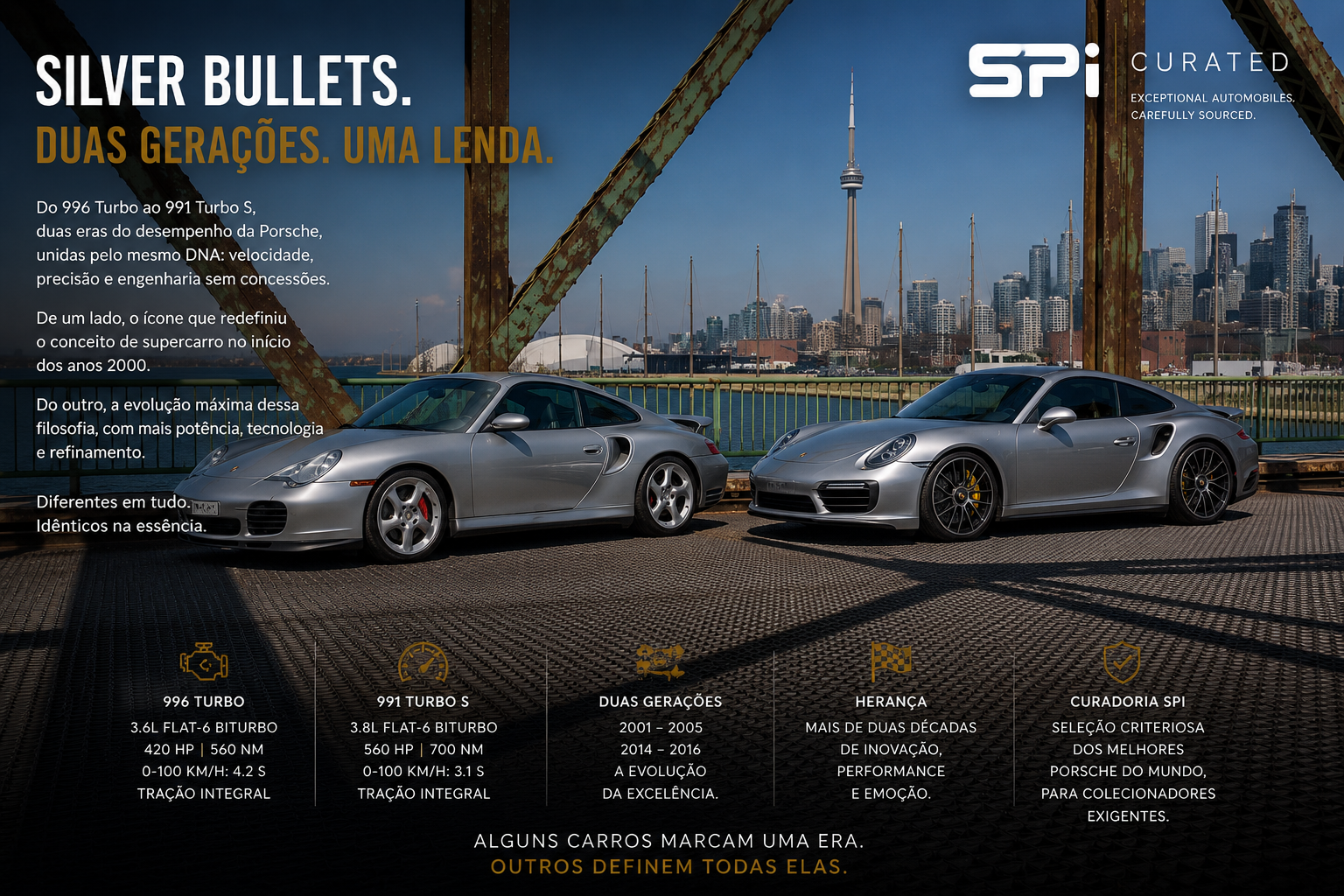
The 996 Turbo — The car that refused to be dismissed when the 996 generation arrived in 1997, it divided the Porsche world in two.
The water-cooled engine broke with forty years of air-cooled tradition. The "fried egg" headlights — shared with the entry-level Boxster — offended purists who felt the 911 had been compromised.
The internet, still in its early years, found its first automotive controversy.
The 996 Turbo arrived in 2000 and silenced most of the argument. Not because it addressed the aesthetic complaints — it didn't — but because it was, objectively, one of the most capable road cars on the planet. A 3.6-litre twin-turbocharged flat-six producing 420 horsepower in standard form, with 450 available via the X50 package. All-wheel drive. A zero-to-100 km/h time of 4.2 seconds in an era when that number put you in genuinely rare company.
Today, the 996 Turbo sits in a collector's blind spot that is rapidly closing. A generation of buyers who grew up watching it dismissed it as the "ugly" 911 — and are now old enough to afford one. Values have been recovering steadily since 2019. The X50 cars, the GT2, and low-mileage examples with known history are particularly sought after. The window of acquisition at rational prices is narrowing.
The 991 Turbo S — When Porsche stopped apologising by the time the 991 generation launched in 2011, Porsche had nothing left to prove and knew it. The 991 Turbo S — which arrived in 2013 — was the product of a company at the absolute peak of its engineering confidence. 560 horsepower. 0–100 in 3.1 seconds. Active aerodynamics that adjusted in real time. PASM sport suspension that could read the road faster than most drivers could react to it.
What the 991 Turbo S represented, however, was more than a specification sheet. It was the moment the 911 became definitively, irrefutably the benchmark. Not a benchmark for sports cars. Not a benchmark in its class. The benchmark — full stop. Ferrari, McLaren, and Lamborghini were all producing cars in the same performance territory. None of them offered the same daily usability, the same reliability, or the same confidence on a wet road at 200 km/h.
Values on clean 991 Turbo S examples have been remarkably stable — more stable than the broader used car market. Low-mileage cars with full Porsche dealer history and original paint are appreciating modestly.
They are not yet investment-grade in the strict sense, but the trajectory is unmistakable.
Side by Side — What the Comparison Reveals
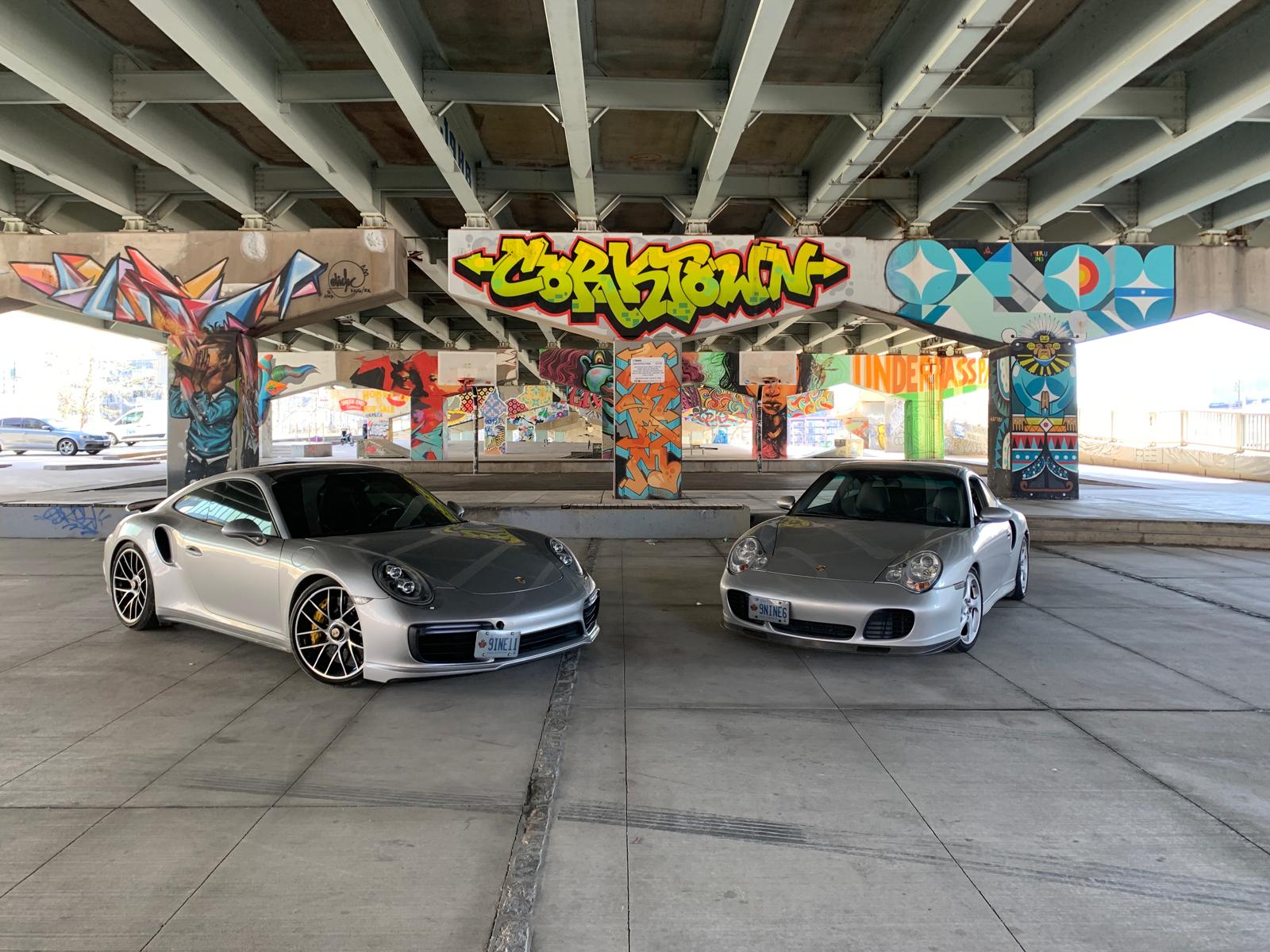
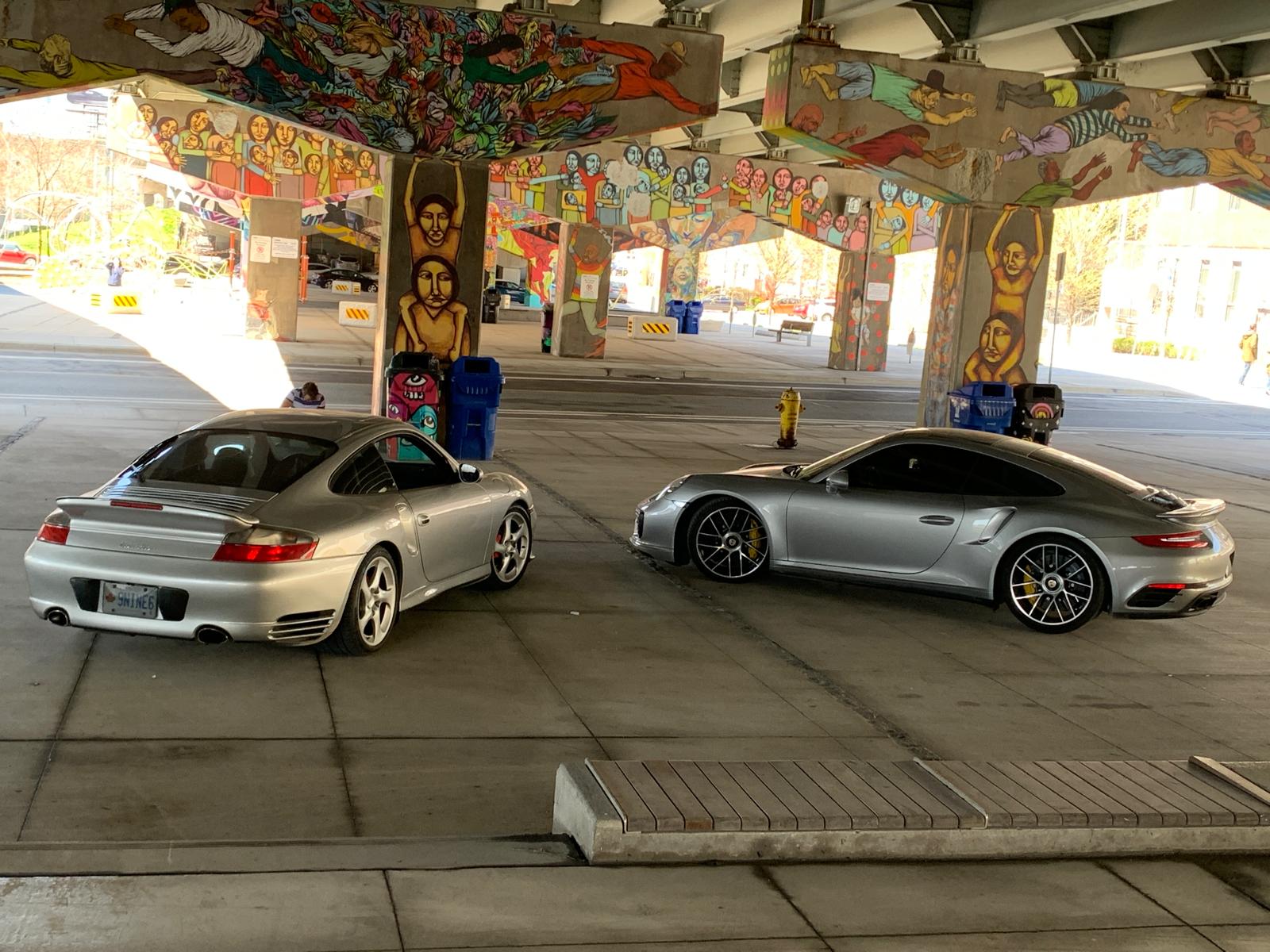
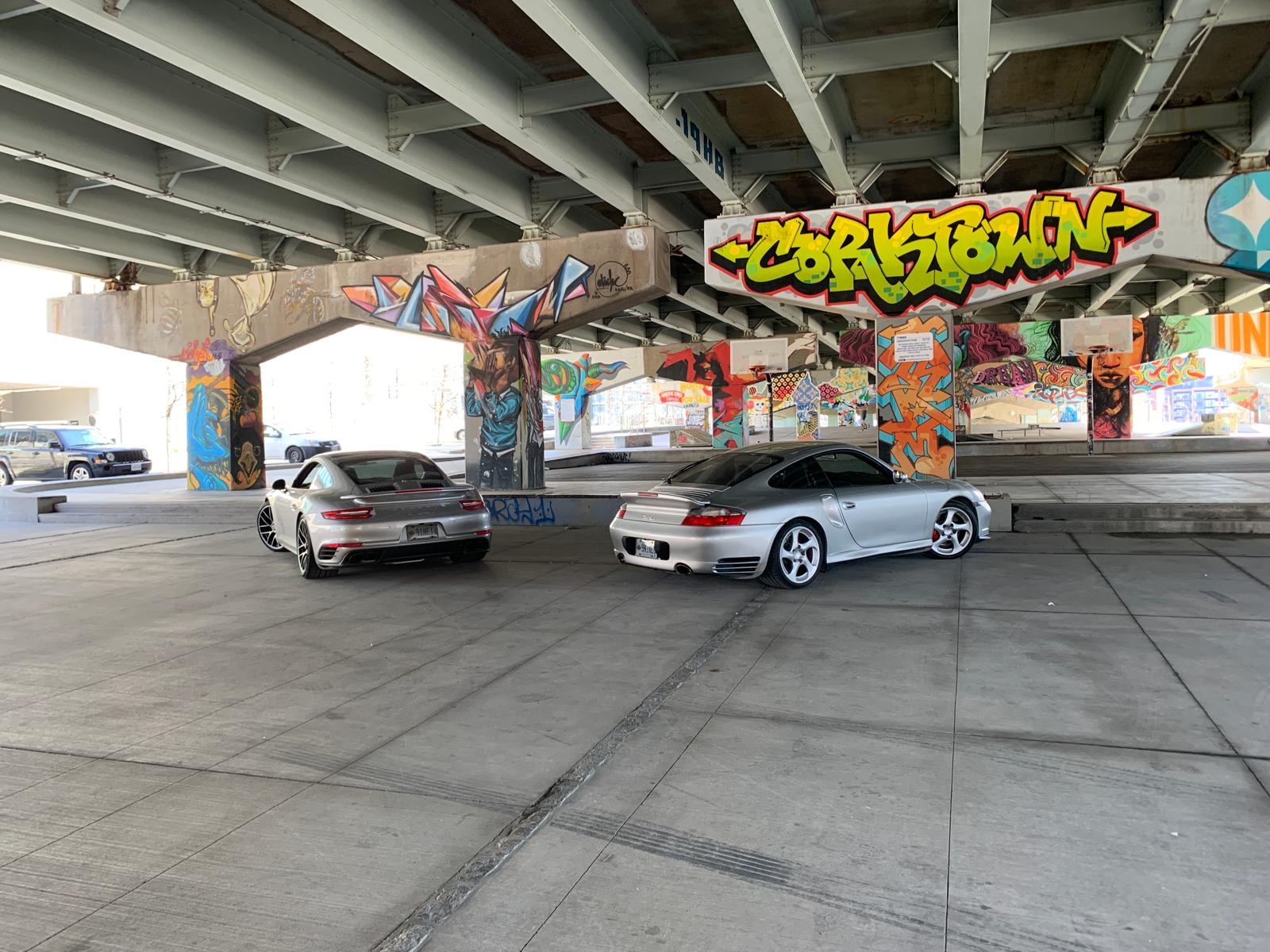
Park them together — as you can see in this video, shot in Toronto with the CN Tower in the background — and the twenty-year gap between them becomes visible in every line. The 996 sits lower, its silhouette more compact, the surfacing simpler.
The 991 is wider, more muscular, the rear haunches pushed out to accommodate the wider track. They are unmistakably related and unmistakably different.
Drive them back to back and the gap narrows in ways that surprise.
The 996 Turbo is not slow by any modern standard. On a flowing road, the gap in outright performance is largely theoretical — the 991 has more of everything, but the 996 has everything you need. What the 991 offers that the 996 cannot is composure: it absorbs bad roads, bad decisions, and bad conditions with a serenity that the older car cannot fully match.
For the collector, this comparison illuminates a question worth asking before any acquisition: are you buying performance, or are you buying history? The 996 Turbo is history — an inflection point, misunderstood for twenty years and now being reassessed.
The 991 Turbo S is the apotheosis of a lineage — the best expression of what the 911 Turbo formula became before the next reinvention.
Both answers are correct.
The question is which one belongs in your garage.
Importing Your Porsche — What SPI Curated Does
Both of these cars were acquired, maintained, and driven across multiple jurisdictions over years of ownership.
That experience — the logistics, the compliance requirements, the cost structures across different markets — is exactly what SPI Curated was built to manage on your behalf.
Whether you are looking at a 996 Turbo from a Japanese auction, a 991 Turbo S from a European private collection, or any other Porsche variant with collector credentials, the acquisition process involves more variables than most buyers anticipate: export procedures, shipping, import duties, compliance assessments, and registration — each market with its own requirements, timelines, and cost structures.
SPI Curated operates on a mandate basis.
You define the car.
We find it, verify it, and deliver it — to Brazil, Canada, or the United Kingdom — with full cost transparency before you commit to anything.
No inventory.
No conflict of interest.
No surprises at the port.
Gallery
Videos
Interested in This Vehicle?
Submit a mandate and we'll source this vehicle for you.
Submit a Mandate